

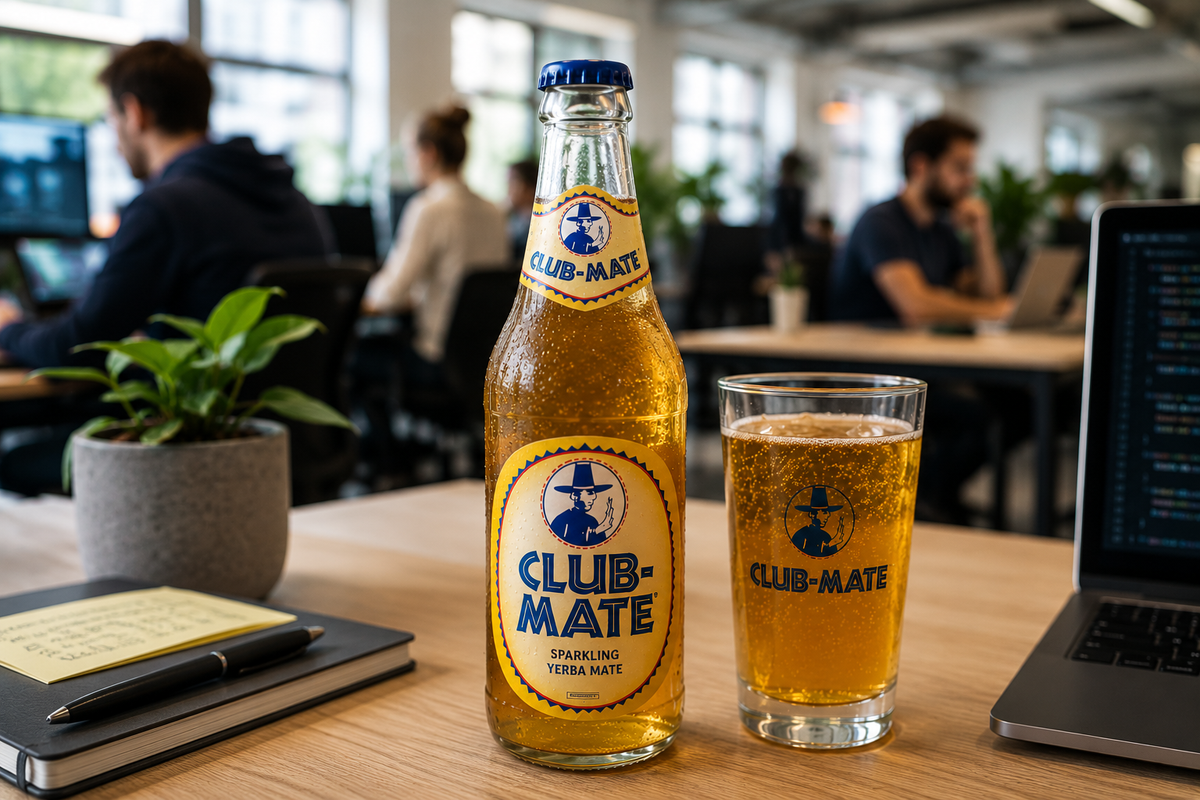
What Is Club-Mate? The German Yerba Mate Drink Explained
If you've spotted a distinctive amber-colored bottle with a yellow-and-blue label and wondered, “What is Club-Mate?”, you're not alone.
For many Americans, Club-Mate is still something of a discovery. In Germany — particularly in Berlin's tech, creative, and nightlife scenes — it's a familiar sight. You'll find it in offices, universities, clubs, cafés, coworking spaces, and probably next to more than a few laptops.
But what exactly is a Club-Mate drink? Is it tea? Soda? An energy drink?
The answer is a little bit of all three — and that's precisely what makes Club-Mate different.
What Is Club-Mate?
Club-Mate is a sparkling yerba mate drink from Germany, made with yerba mate and naturally occurring caffeine.
It is carbonated and served cold like a soda, but its distinctive character comes from yerba mate, a plant native to South America that has been consumed for centuries.
The result is a refreshing, lightly sweet, slightly bitter drink that's difficult to compare directly with anything else.
Club-Mate isn't trying to taste like cola, lemonade, iced tea, or a conventional energy drink.
It tastes like Club-Mate.
And for many fans, that's exactly the point.
What Is Yerba Mate?
To understand Club-Mate, you first need to understand yerba mate.
Yerba mate comes from the leaves of the Ilex paraguariensis plant, native to South America. It has a particularly strong cultural tradition in Argentina, Paraguay, Uruguay, and southern Brazil.
Traditionally, yerba mate leaves are steeped in water and enjoyed from a gourd using a metal straw known as a bombilla.
Mate isn't simply another tea. For generations, drinking and sharing mate has been a social ritual — something enjoyed while talking, working, relaxing, or spending time together.
Club-Mate takes inspiration from this tradition and brings yerba mate into a completely different format: cold, sparkling, bottled, and ready to drink.
Is Club-Mate a Soda?
People searching for “Club Mate soda” aren't entirely wrong.
Club-Mate is carbonated, bottled, and usually served cold, so the experience can certainly feel similar to drinking soda.
But calling it simply a soda doesn't tell the whole story.
The defining ingredient is yerba mate, which gives Club-Mate its characteristic flavor and naturally occurring caffeine.
A better description is sparkling yerba mate tea.
Think of it as sitting somewhere between iced tea, soda, and a caffeinated beverage — while maintaining a flavor and identity entirely its own.
Does Club-Mate Have Caffeine?
Yes.
One of the defining characteristics of the Club-Mate drink is that it contains caffeine derived from yerba mate.
Club-Mate contains approximately 20 mg of caffeine per 100 ml, meaning a 500 ml (16.9 oz) bottle contains approximately 100 mg of caffeine.
This has helped make Club-Mate particularly popular among people whose days — and nights — can run long.
Students, programmers, designers, gamers, founders, artists, musicians, and other creative communities have all become closely associated with the drink.
What Does Club-Mate Taste Like?
This is where things get interesting.
Club-Mate isn't extremely sweet.
Its taste is often described as earthy, herbal, slightly bitter, lightly sweet, and refreshing, with carbonation giving it a crisp finish.
If you're expecting the intense sweetness of a conventional soda or energy drink, your first sip might surprise you.
And that's normal.
Club-Mate has a distinctive taste that many people grow to appreciate precisely because it isn't trying to taste like everything else in the beverage aisle.
Serve it cold, preferably straight from the fridge.
Why Is Club-Mate So Popular in Berlin?
Club-Mate has become deeply connected with Berlin's modern cultural identity.
Over the years, it developed a loyal following within the city's hacker and technology communities before spreading through startups, universities, coworking spaces, creative studios, nightlife, and clubs.
That created an unusual identity around the brand.
Club-Mate wasn't simply another caffeinated beverage.
It became part of a culture.
A bottle next to a laptop during a coding session.
A cold Club-Mate during an afternoon at university.
A crate in the office fridge.
A bottle in your hand during a long night in Berlin.
That connection with technology, creativity, nightlife, and independent culture helped Club-Mate develop the cult following it has today.
Is Club-Mate an Energy Drink?
It depends on how you define one.
Club-Mate contains caffeine and can certainly be enjoyed when you're looking for some energy. However, its identity is quite different from the conventional energy-drink category.
Its caffeine comes from yerba mate, and its flavor is much closer to a sparkling botanical tea than the intensely sweet profile many people associate with energy drinks.
That's why we prefer to describe Club-Mate for what it is:
A sparkling yerba mate tea with natural caffeine.
Who Drinks Club-Mate?
There's no particular type of person who has to drink Club-Mate, but the brand has developed especially strong communities among:
Programmers working through difficult code.
Students preparing for exams.
Designers trying to finish a project before a deadline.
Gamers settling in for a long session.
Startup teams building something new.
Artists, musicians, and creatives working late.
And, of course, people who simply like the taste.
You don't need to be working until 2 a.m. to enjoy Club-Mate.
Sometimes you just want something cold and refreshing.
From Germany to the USA
For decades, Club-Mate has been part of German alternative and contemporary culture. Today, more Americans are discovering the drink and the yerba mate tradition behind it.
That's also why searches like “what is Club Mate,” “Club Mate drink,” and “Club Mate soda” are becoming increasingly relevant in the United States.
For someone seeing that yellow-and-blue bottle for the first time, Club-Mate can be difficult to categorize.
And perhaps that's part of its appeal.
It's not quite tea.
It's not quite soda.
It's not your typical energy drink.
It's Club-Mate — Germany's iconic sparkling yerba mate drink.
If you're curious what all the fuss is about, there's really only one way to find out.
Open one cold and take the first sip.
Read more
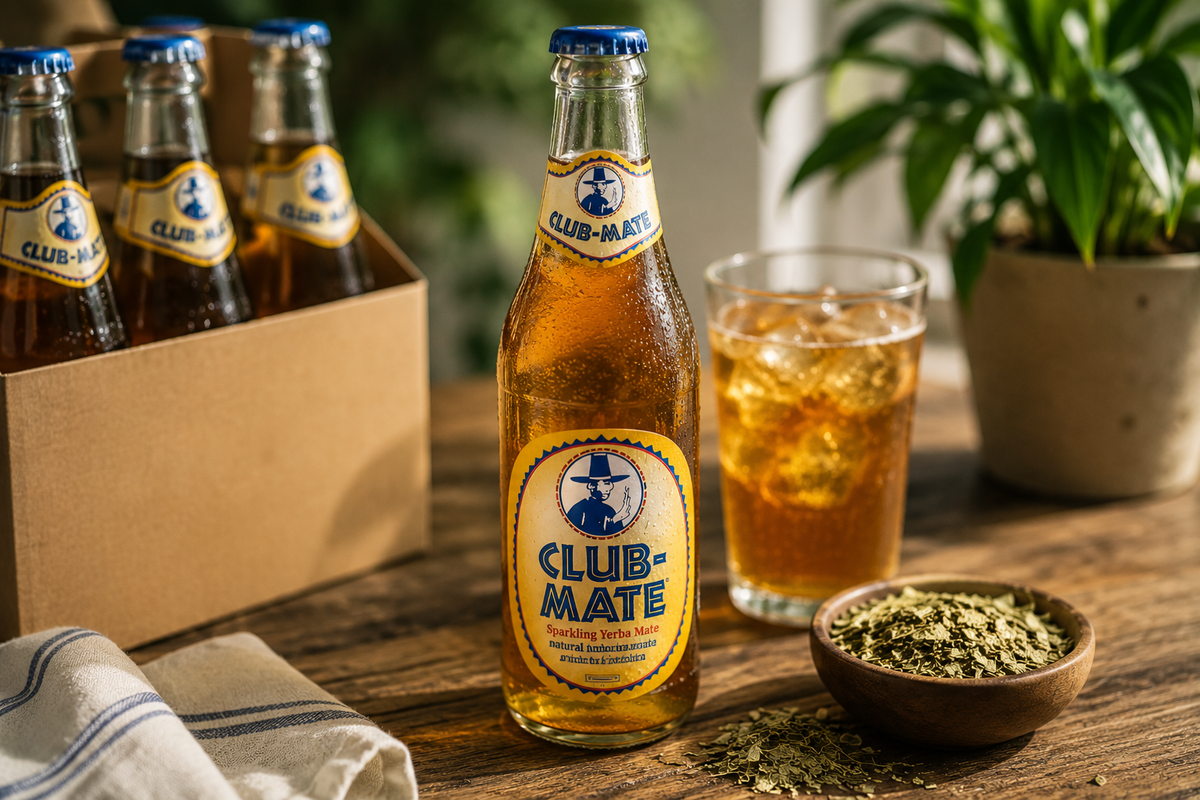
Does Club-Mate have caffeine? Yes! Discover Club-Mate’s caffeine content, how yerba mate provides natural caffeine, and how it compares to coffee.
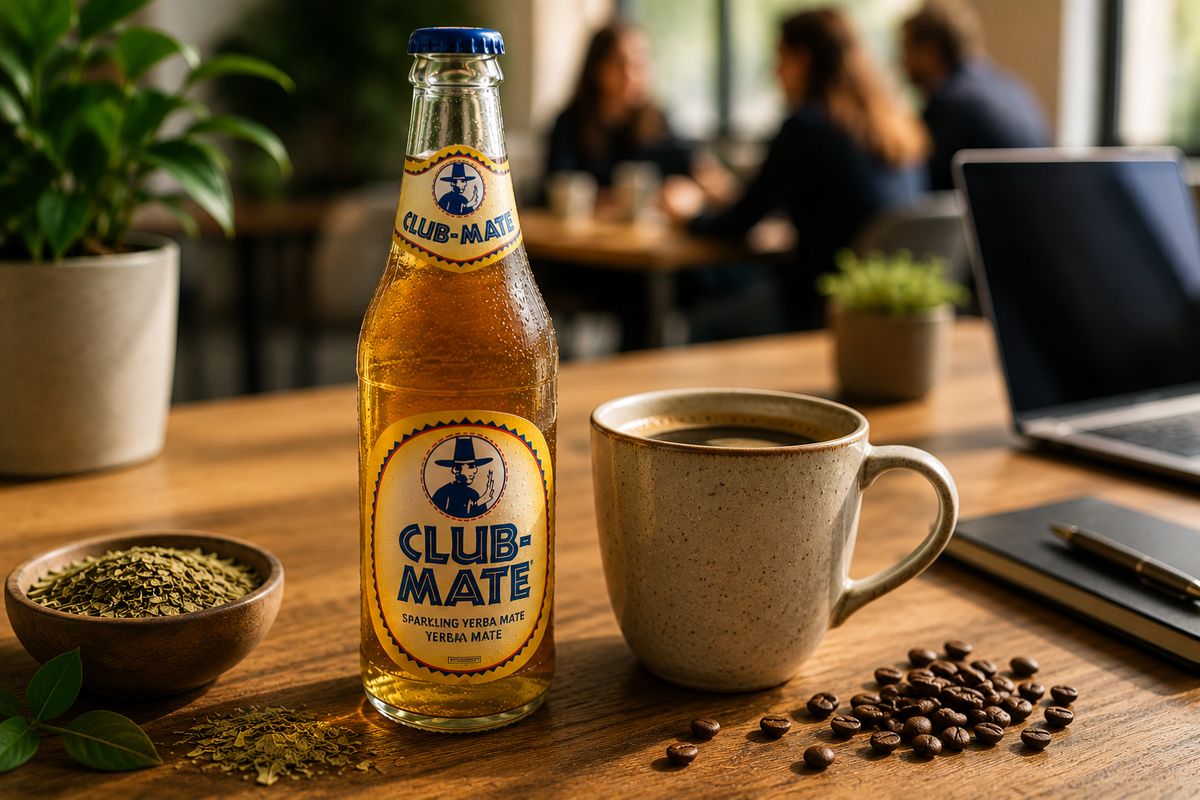
Club-Mate vs. coffee: how do they compare? Discover the differences in caffeine, taste, yerba mate, and which drink might fit different moments in your day.