

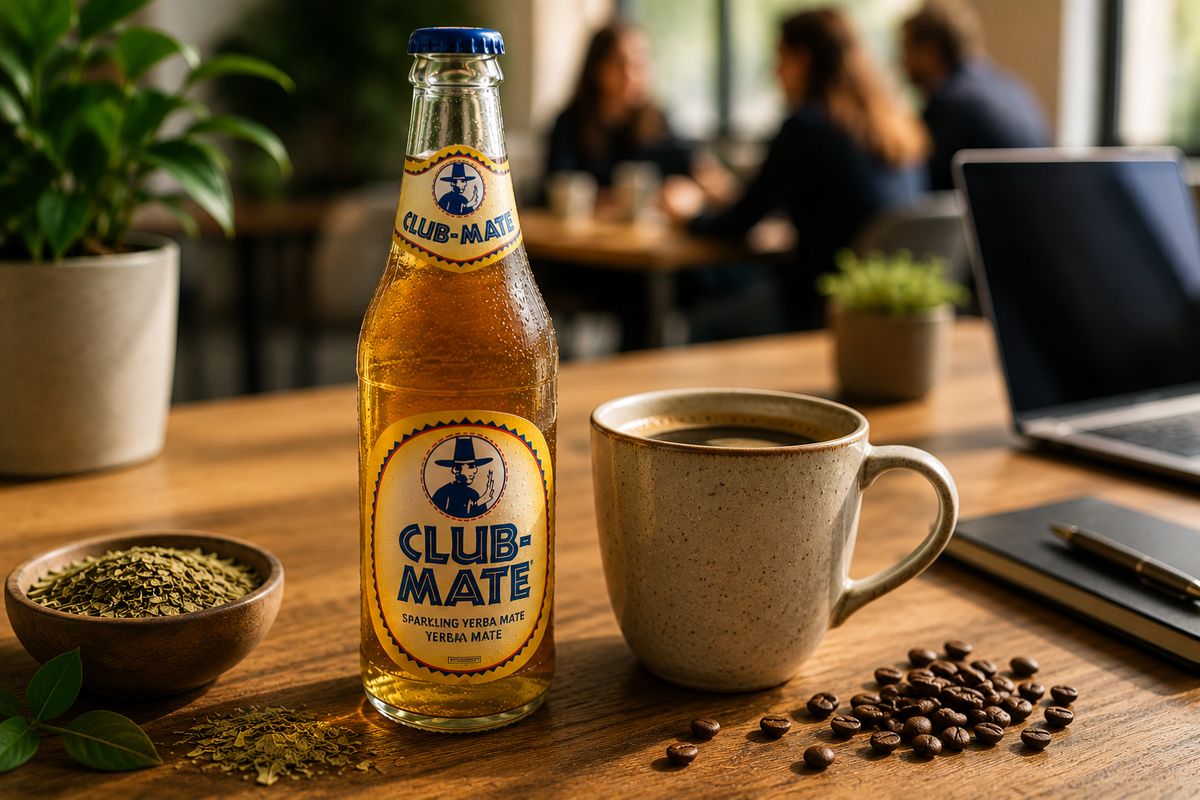
Club-Mate vs. Coffee: Which One Fits Your Day?
Coffee has been the default answer to “I need caffeine” for generations. Morning meeting? Coffee. Long study session? Coffee. Deadline approaching? Probably another coffee.
But if you’ve discovered Club-Mate, you might be wondering how the two actually compare.
The Club-Mate vs. coffee question isn’t really about declaring one drink the winner. Both contain caffeine, both have devoted fans, and both can fit into a busy day. The bigger difference is the experience: one is brewed from coffee beans, while the other is a cold, sparkling drink made with yerba mate.
So, which one fits your day? Let’s take a closer look.
Club-Mate vs. Coffee: What’s the Difference?
The most obvious difference is what they’re made from.
Coffee is brewed from roasted coffee beans. Club-Mate is a sparkling yerba mate drink made using yerba mate, a South American plant that naturally contains caffeine.
That gives the two drinks very different personalities.
Coffee is rich, roasted, aromatic, and traditionally served hot. Club-Mate is carbonated, refreshing, slightly bitter, lightly sweet, and typically enjoyed ice cold.
Both contain caffeine, but getting there is an entirely different experience.
Club-Mate Caffeine vs. Coffee
One of the biggest questions people have is how Club-Mate caffeine vs. coffee compares.
Club-Mate contains approximately 20 mg of caffeine per 100 ml. That means a 500 ml (16.9 oz) bottle contains approximately 100 mg of caffeine.
Coffee is harder to give a single number because caffeine levels can vary considerably depending on the type of coffee, beans, brewing method, and serving size.
So rather than thinking of coffee as having one standard caffeine level, it’s better to check the serving you're actually drinking.
With Club-Mate, the calculation is more straightforward: approximately 20 mg per 100 ml.
And remember—caffeine adds up. Whether it comes from coffee, Club-Mate, tea, or another source, your total caffeine consumption throughout the day matters.
Yerba Mate vs. Coffee
The broader yerba mate vs. coffee comparison goes back much further than Club-Mate itself.
Yerba mate has been consumed in South America for centuries, particularly in Argentina, Paraguay, Uruguay, and southern Brazil. Traditionally, the dried leaves are steeped in water and consumed from a gourd through a metal straw called a bombilla.
Coffee has its own centuries-old traditions and has become one of the world's most widely consumed beverages.
Both plants naturally contain caffeine, but they bring completely different flavors, rituals, and cultures with them.
Club-Mate takes the yerba mate side of that story and adapts it to modern life.
Instead of preparing loose mate leaves, hot water, a gourd, and a bombilla, you open a cold bottle.
Same fascinating plant. Very different format.
What Does Club-Mate Taste Like Compared With Coffee?
They’re almost impossible to confuse.
Coffee tends to have roasted, bitter, nutty, chocolatey, fruity, or earthy notes depending on the beans and preparation.
Club-Mate has a distinctive herbal, earthy, lightly sweet and slightly bitter flavor, combined with carbonation.
That carbonation makes a major difference.
A cold Club-Mate can feel more like a refreshing soft drink or sparkling tea than a traditional hot caffeinated beverage.
If you like coffee partly because of its warmth and rich aroma, Club-Mate isn't trying to replace that experience.
But if it's a warm afternoon and you want something cold, fizzy, and caffeinated, the decision may look very different.
Morning: Coffee or Club-Mate?
For many people, morning belongs to coffee.
There's something about the ritual: grinding the beans, brewing a cup, smelling the coffee, and taking those first few sips.
Club-Mate offers another option, particularly if you prefer your caffeine cold.
Open the fridge, grab a bottle, and you're ready to go.
No grinder. No coffee machine. No waiting for anything to brew.
For an early commute, a morning at university, or a busy start at the office, that convenience can be useful.
Afternoon: When Club-Mate Makes Sense
This may be where Club-Mate really starts to differentiate itself.
Imagine it's 2:30 p.m.
You've already had coffee in the morning. Lunch is over. There's still a significant amount of work ahead of you, but another hot coffee doesn't sound particularly exciting.
A cold sparkling Club-Mate offers a completely different experience.
This is one reason Club-Mate fits naturally into offices, universities, studios, coworking spaces, and tech environments. You can keep a few bottles in the fridge and grab one whenever you want something refreshing that also contains caffeine.
Studying, Coding and Creative Work
Club-Mate has developed a strong following among programmers, students, gamers, designers, founders, and creatives.
That isn't particularly surprising.
These are all environments where long stretches of concentration can be common.
You might be debugging code, preparing for an exam, editing a video, finishing a presentation, designing until a deadline, or trying to get a startup project out the door.
Coffee fits these situations too, of course.
But Club-Mate offers something different: a cold, carbonated yerba mate drink that you can sip while you work.
And if there happens to be a fridge full of Club-Mate in the office, the coffee machine suddenly has some competition.
What About Sugar?
This is another area where comparisons can become misleading.
Black coffee contains virtually no sugar, but many popular coffee drinks include milk, syrups, sweeteners, whipped toppings, or other ingredients.
Club-Mate is a prepared beverage, so its nutritional information is consistent for the product you're drinking.
If sugar or calories are important to you, the fairest comparison is to check the nutrition information for your Club-Mate bottle against the specific coffee drink you would otherwise order, rather than comparing it only with plain black coffee.
So, Is Club-Mate Better Than Coffee?
That's the wrong question.
Coffee doesn't need replacing.
Neither does yerba mate.
They can simply fit different moments.
Coffee might be your slow morning ritual.
Club-Mate might be the cold bottle you grab before an afternoon meeting.
Coffee might accompany breakfast.
Club-Mate might sit next to your laptop while you're working through a difficult project.
And some days, you'll probably have both.
Club-Mate vs. Coffee: Which One Fits Your Day?
If you enjoy the taste and ritual of freshly brewed coffee, keep drinking your coffee.
But if you're looking for a cold, sparkling alternative with caffeine from yerba mate, Club-Mate offers something completely different.
That's ultimately what makes the Club-Mate vs. coffee comparison interesting.
They're not really trying to be the same drink.
Coffee comes from a long tradition of roasted beans, brewing, cafés, and morning rituals. Yerba mate comes from its own centuries-old South American tradition of sharing and drinking mate.
Club-Mate takes that mate tradition and puts it into a bottle designed for modern life.
So tomorrow morning?
Maybe coffee.
At 3:17 p.m., with twelve browser tabs open and a deadline approaching?
There might be a Club-Mate in the fridge with your name on it.
Read more
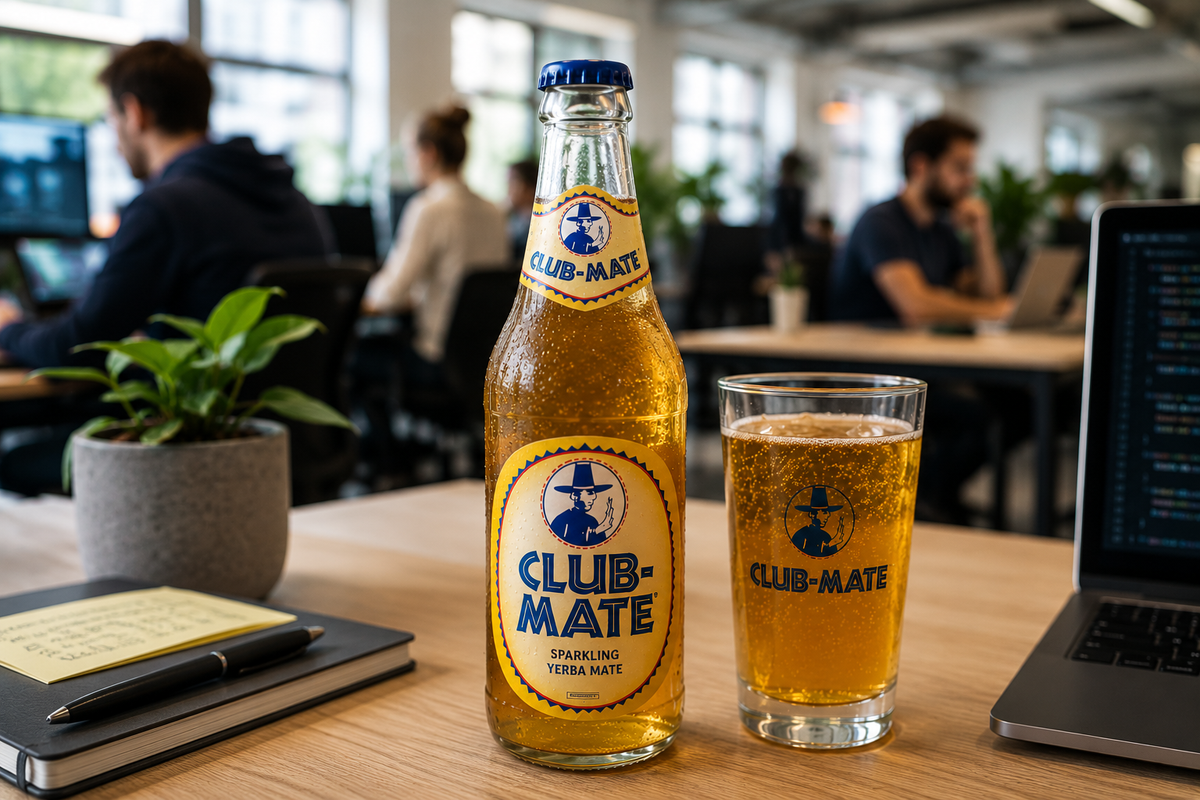
What is Club-Mate? Discover Germany’s iconic sparkling yerba mate drink, its unique taste, natural caffeine, history, and why it has a cult following.
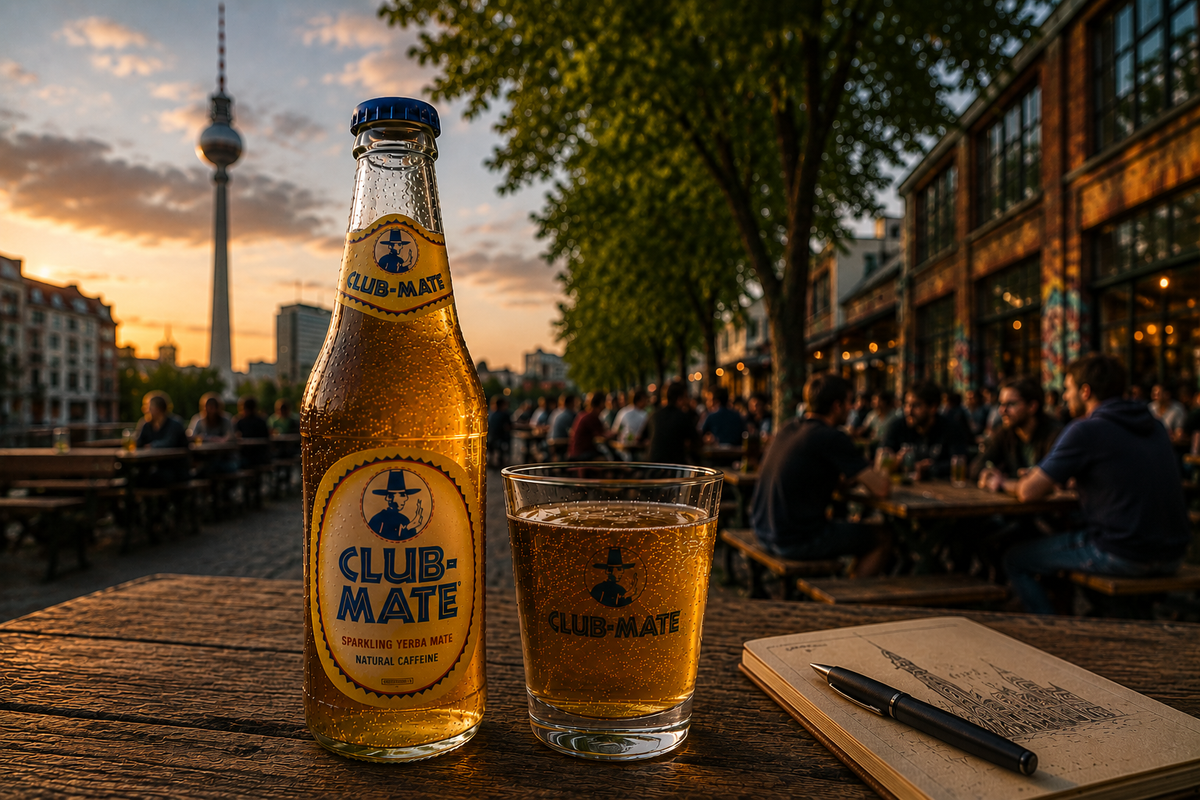
Discover the origin of Club-Mate, from South America’s centuries-old yerba mate tradition to German beverage culture and its cult following in Berlin.