

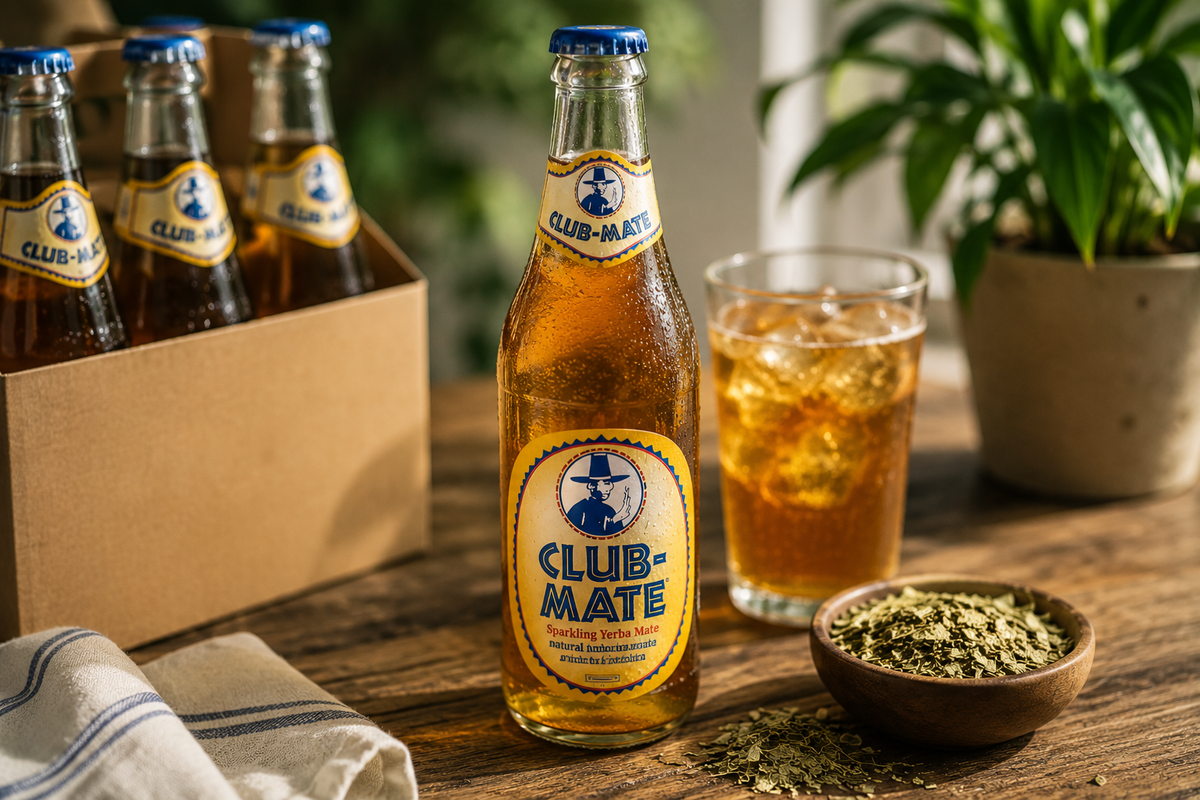
Does Club-Mate Have Caffeine? Everything You Need to Know
Yes, Club-Mate has caffeine. But unlike many conventional energy drinks, the caffeine in Club-Mate comes from yerba mate, the South American plant that gives the drink its distinctive flavor and energizing character.
If you've discovered Club-Mate recently, you might be wondering exactly what you're drinking, where its caffeine comes from, and why Club-Mate has become such a popular companion for programmers, students, creatives, gamers, and people with long days ahead of them.
Here's what you need to know about Club-Mate caffeine and the story behind it.
Where Does the Caffeine in Club-Mate Come From?
Club-Mate is made using yerba mate, a plant native to South America that naturally contains caffeine.
Yerba mate has a long history, particularly in countries such as Argentina, Paraguay, Uruguay, and Brazil. Traditionally, dried yerba mate leaves are steeped in hot water and consumed from a gourd using a metal straw called a bombilla.
Club-Mate takes inspiration from this tradition and transforms yerba mate into something designed for modern life: a refreshing, carbonated drink that can be enjoyed cold and taken practically anywhere.
The result is a sparkling yerba mate tea with naturally occurring caffeine.
How Much Caffeine Does Club-Mate Have?
The Club-Mate caffeine content is approximately 20 mg of caffeine per 100 ml.
That means the amount of caffeine you consume depends on the bottle or can size.
For example, a 16.9 oz (500 ml) bottle contains approximately 100 mg of caffeine, while a smaller serving contains proportionally less.
That makes Club-Mate an interesting option for people who want a caffeinated beverage but prefer something different from another cup of coffee or a conventional energy drink.
Is Club-Mate an Energy Drink?
Club-Mate certainly provides energy through caffeine, but it doesn't fit neatly into what many Americans imagine when they hear the words "energy drink."
The experience is different.
Instead of an extremely sweet flavor or the typical taste associated with conventional energy drinks, Club-Mate has a distinctive, slightly bitter and refreshing yerba mate flavor with carbonation.
It's one reason people sometimes describe Club-Mate as a sparkling yerba mate tea rather than simply an energy drink.
And if you're drinking Club-Mate for the first time, don't be surprised if the flavor feels unusual.
That's part of the experience.
Club-Mate Caffeine vs. Coffee
Coffee and Club-Mate can both provide caffeine, but they're very different drinks.
Coffee is typically served hot, although iced coffee has obviously become enormously popular. Club-Mate is carbonated, refreshing, and usually enjoyed cold.
Caffeine content in coffee can also vary considerably depending on the beans, preparation method, serving size, and café.
Club-Mate, meanwhile, offers the convenience of a ready-to-drink bottle or can with caffeine derived from yerba mate.
So is one better than the other?
Not necessarily.
Sometimes you want coffee.
Sometimes you're six hours into a project, there's another meeting coming up, and that cold bottle of Club-Mate in the fridge looks considerably more appealing.
Why Is Club-Mate Popular With Programmers and Students?
Club-Mate has developed something of a cult following among programmers, hackers, students, gamers, creatives, and startup communities.
Its connection to Berlin's tech and alternative culture has played a major role in that reputation.
But there's also a practical reason.
These are communities where long periods of concentration are common.
Think about preparing for an exam, debugging code late at night, finishing a design before a deadline, working on a startup launch, or getting through an extended gaming session.
Having a cold caffeinated drink nearby simply fits the environment.
Club-Mate combines that functionality with a drink that has its own culture, history, and unmistakable taste.
Does Club-Mate Have Natural Caffeine?
Yes. The caffeine associated with Club-Mate comes from the yerba mate used to make the drink.
Yerba mate naturally contains caffeine, which is one of the reasons people have consumed it for generations.
Long before Club-Mate bottles appeared in Berlin offices and university libraries, mate was already part of everyday life in South America.
Club-Mate brings that tradition into a completely different setting.
The gourd becomes a bottle.
The bombilla becomes a bottle opener.
And a centuries-old caffeinated drink becomes something you can pull straight from the office fridge.
When Should You Drink Club-Mate?
That's entirely up to you.
Some people enjoy Club-Mate as an afternoon alternative to coffee. Others reach for one while studying, working, coding, gaming, traveling, or heading into a long evening.
Because it contains caffeine, however, it's worth keeping your own caffeine sensitivity and total daily caffeine consumption in mind—especially later in the day.
So, Does Club-Mate Have Caffeine?
Yes. Club-Mate contains approximately 20 mg of caffeine per 100 ml, derived from yerba mate.
But caffeine is only part of what makes Club-Mate distinctive.
It's the combination of yerba mate tradition, sparkling refreshment, a uniquely bittersweet taste, and decades of culture surrounding the drink that makes Club-Mate something different from your usual coffee or energy drink.
From traditional mate culture in South America to universities, offices, creative studios, gaming setups, and tech communities around the world, the setting may have changed considerably.
The idea hasn't:
Stay refreshed. Stay focused. Keep going.
Read more
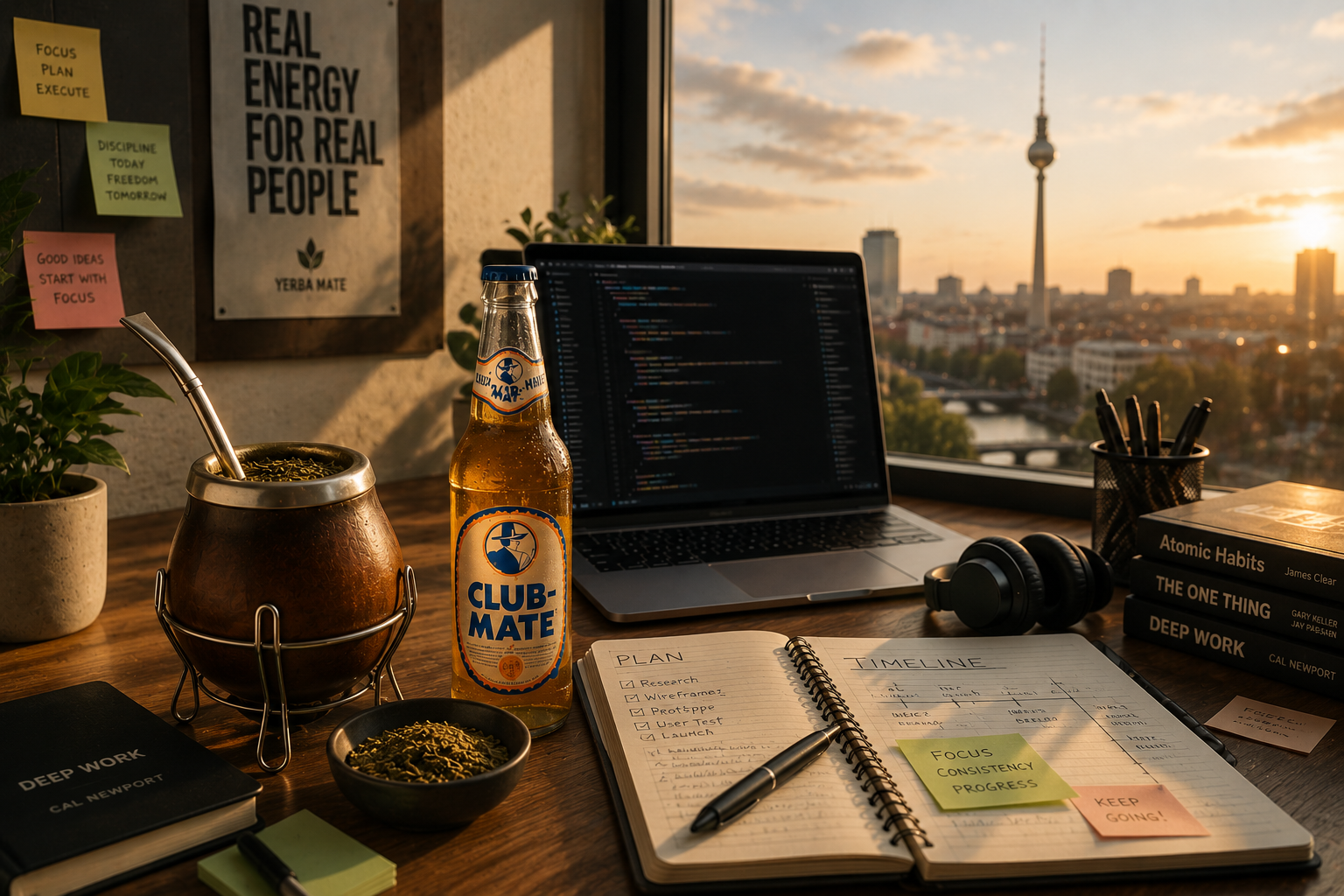
Discover how Club-Mate transforms the centuries-old tradition of yerba mate into a modern drink for productivity, focus, and long work sessions. Learn why students, programmers, entrepreneurs, and ...
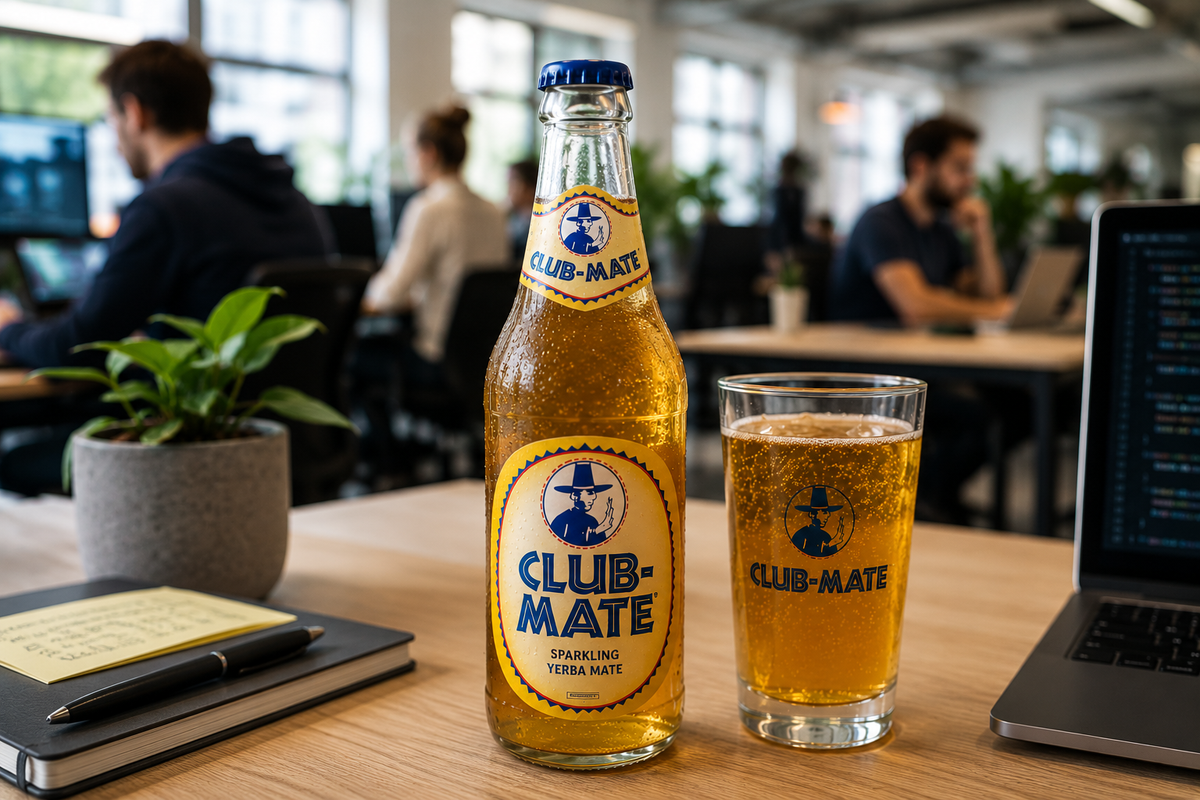
What is Club-Mate? Discover Germany’s iconic sparkling yerba mate drink, its unique taste, natural caffeine, history, and why it has a cult following.